
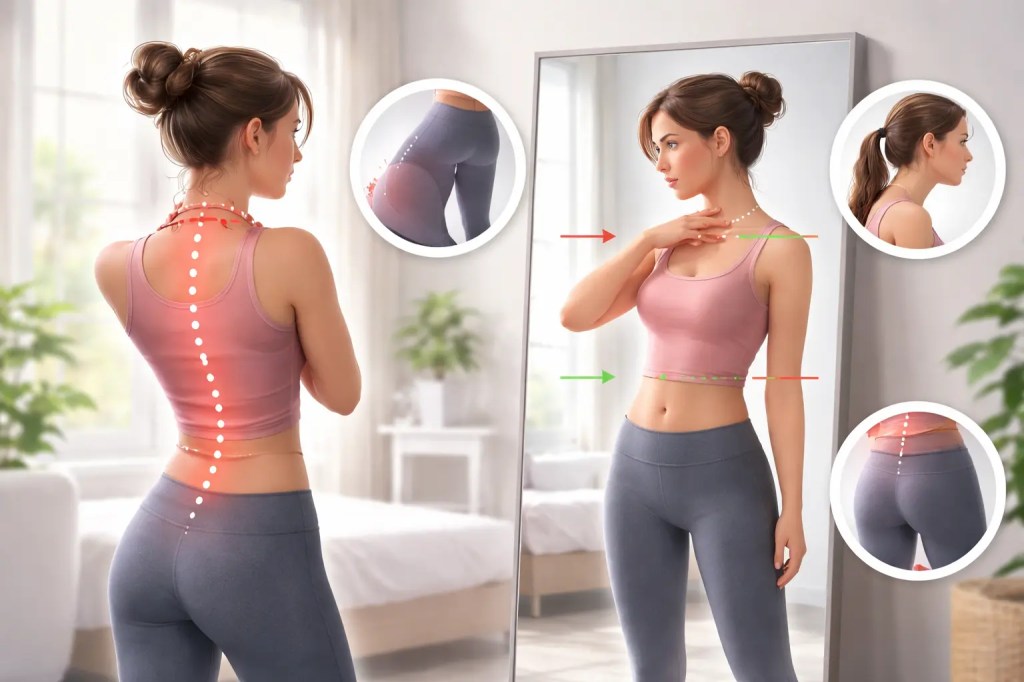
Posture imbalance affects how the body stands, sits, and moves. Many people develop poor posture due to long hours of sitting, phone use, or weak muscles. Early detection helps prevent pain and long-term issues. This article explains how to identify early signs of poor posture using clear and simple points. It also shows how a posture reminder app can support better habits.
What Is Posture Imbalance
Posture imbalance occurs when the body does not align in a natural position. The spine, shoulders, and hips shift away from their correct alignment. This shift places stress on muscles and joints.
A healthy posture keeps the head aligned with the spine. The shoulders stay level, and the back maintains a natural curve. Poor posture breaks this alignment. The body then uses more energy to stay upright. This leads to fatigue and discomfort.
Common Causes of Poor Posture
Several daily habits lead to poor posture. These habits often seem normal, but they slowly affect body alignment.
People sit for long hours without support. They lean forward while using phones or laptops. Weak core muscles fail to support the spine. Lack of exercise reduces flexibility. Stress also causes people to tighten shoulder muscles.
Bad workstation setup also contributes. A low screen forces the neck to bend. A chair without support affects the lower back. These small issues create long-term posture imbalance.
Early Physical Signs of Posture Imbalance
Forward Head Position
The head moves forward instead of staying aligned with the spine. This position strains the neck muscles. You may notice your chin pushing outward when you sit or stand.
This sign appears early in people who use phones often. It increases the risk of neck pain and stiffness.
Rounded Shoulders
The shoulders roll forward instead of staying straight. This change affects the upper back. It also reduces chest expansion.
Rounded shoulders often appear in people who sit for long hours. It gives a slouched look and reduces confidence in body language.
Uneven Shoulders or Hips
One shoulder may sit higher than the other. The same may happen with the hips. This imbalance shows that the body shifts weight unevenly.
This sign can lead to back pain if ignored. It may also affect walking patterns.
Lower Back Curve Changes
The lower back may show too much curve or too little curve. Both conditions signal poor posture. An excessive curve strains the spine. A flat back reduces shock absorption.
You may feel discomfort after standing or sitting for a long time.
Movement-Based Signs
Stiffness During Movement
The body feels tight during simple movements. You may notice stiffness when turning your neck or bending your back.
This stiffness shows that muscles lose flexibility. Poor posture reduces the range of motion over time.
Pain After Sitting or Standing
Pain appears after you stay in one position for a short time. This pain often affects the neck, shoulders, or lower back.
The body sends this signal as a warning. It shows that posture needs correction.
Fatigue in Muscles
You feel tired even without heavy activity. The muscles work harder to support poor posture. This leads to early fatigue.
Fatigue often affects the upper back and neck areas.
Visual Signs You Can Check at Home
Mirror Test
Stand in front of a mirror. Look at your body alignment. Check if your shoulders stay level. Observe if your head leans forward.
A straight posture shows symmetry. Any visible shift indicates imbalance.
Wall Test
Stand with your back against a wall. Your head, shoulders, and hips should touch the wall. If any part does not align, posture imbalance exists.
This test gives a quick and simple check.
Photo Comparison
Take a side photo of your posture. Compare it with a correct posture image. Look for differences in head position and spine alignment.
This method helps track changes over time.
How Poor Posture Affects Health
Poor posture affects more than appearance. It impacts overall health in several ways.
It reduces breathing efficiency. The lungs cannot expand fully. It affects digestion due to pressure on internal organs. It increases the risk of chronic pain in the back and neck.
Poor posture also affects mood. A slouched position links to low energy and reduced confidence.
Role of a Posture Reminder App
A posture reminder app helps users maintain correct posture throughout the day. It sends alerts to correct sitting or standing position.
These apps track posture habits. They remind users to sit straight or take breaks. Some apps connect with wearable devices to detect body position.
Using a posture reminder app builds awareness. It trains the body to stay aligned without constant effort. It works well for people who spend long hours at desks.
Simple Habits to Detect and Correct Early Signs
Sit with Proper Support
Use a chair that supports the lower back. Keep feet flat on the floor. Align the screen at eye level.
This setup reduces strain on the neck and back.
Take Regular Breaks
Stand up every 30 to 60 minutes. Stretch the body and move around. This action prevents stiffness.
Breaks help reset posture and improve blood flow.
Strengthen Core Muscles
Strong core muscles support the spine. Simple exercises like planks help improve posture.
Regular strength training builds stability.
Stretch Tight Muscles
Stretch the neck, shoulders, and back daily. Stretching improves flexibility and reduces tension.
It also helps correct early posture imbalance.
Use a Posture Reminder App Daily
Set reminders during work hours. Follow the alerts and adjust your position. Over time, the body learns correct posture.
Consistency creates long-term improvement.
When to Seek Professional Help
Some posture issues need expert advice. You should consult a specialist if pain becomes frequent. Severe imbalance or visible spine changes also require attention.
A physiotherapist can assess posture and suggest exercises. Early treatment prevents serious problems.
Long-Term Benefits of Correct Posture
Correct posture improves body function. It reduces pain and increases comfort. It supports better breathing and digestion.
It also improves appearance. A straight posture gives a confident look. It boosts energy levels and productivity.
Maintaining good posture protects the spine. It reduces the risk of injury and long-term health issues.
Conclusion
Posture imbalance starts with small changes in daily habits. Early signs include forward head position, rounded shoulders, and uneven alignment. These signs often go unnoticed but lead to bigger problems.
You can detect these signs through simple tests at home. Awareness plays a key role in correction. A posture reminder app supports daily improvement by building better habits.
Focus on sitting correctly, moving often, and strengthening muscles. These actions help maintain proper posture. Early care leads to long-term health and comfort.
 Every Corner
Leave a comment