
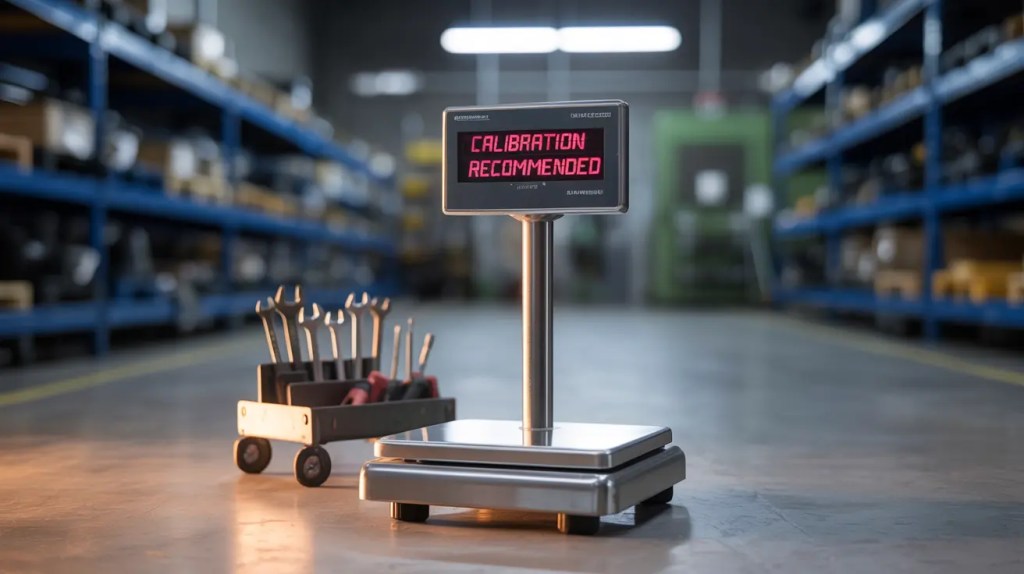
Industrial scales must provide accurate measurements to maintain quality, meet regulations, and avoid losses. Over time, these scales may lose accuracy due to environmental factors, usage frequency, or mechanical wear. This article explains how often to calibrate industrial scales and why regular calibration is essential.
Why Calibration Matters for Industrial Scales
Calibration helps ensure the accuracy of industrial scales, which is essential for maintaining consistent measurements across various applications. Whether used in manufacturing, logistics, or food processing, precise weight data reduces waste, ensures uniform product quality, and supports compliance with strict industry standards. Inaccurate readings can lead to costly errors in production, mismanaged inventory, and a negative impact on customer satisfaction and trust.
To maintain optimal performance, it’s important to invest in high-quality weighing equipment like industrial scales by Scales4U. These scales are designed for durability, accuracy, and reliability in demanding work environments. Scales4U also provides calibration and maintenance support to ensure that each unit operates within the required tolerances. Choosing the right industrial scale solution not only improves efficiency but also reinforces accountability and operational accuracy in your business processes.
Factors That Affect Calibration Frequency
Several factors decide how often to calibrate industrial scales. These factors vary by industry, usage, and environment.
Usage Frequency
Scales used frequently need more regular calibration. Repeated loading, unloading, and movement can shift internal components, which affects accuracy.
Type of Industrial Scale
Some industrial scales are more sensitive than others. Precision laboratory scales may need calibration daily, while platform or floor scales may need it less often.
Legal and Industry Requirements
Some industries follow strict rules about calibration. Food, pharmaceutical, and chemical sectors must meet specific accuracy standards. These rules may require calibration monthly, quarterly, or even more often.
Environmental Conditions
Dust, moisture, vibration, and temperature changes can affect industrial scales. Scales in harsh environments need more frequent calibration than those in clean, controlled settings.
Movement and Transport
Scales moved often may lose their accuracy. Each relocation can affect calibration. In such cases, recalibration after each move is necessary.
Recommended Calibration Schedule
There is no single answer to how often to calibrate industrial scales. However, general guidelines can help businesses create a suitable schedule.
Daily or Weekly Calibration
Some businesses calibrate their industrial scales every day or week, especially if the scales are used in quality control or batch production. This schedule applies to high-precision tasks where accuracy is critical.
Monthly Calibration
For general industrial use, monthly calibration is common. This frequency helps detect minor shifts in accuracy before they cause major problems.
Quarterly or Biannual Calibration
For low-frequency or light-use applications, quarterly or biannual calibration may be enough. However, businesses should still monitor performance regularly to detect any changes early.
Annual Calibration
Annual calibration is the minimum requirement for most industrial scales. This schedule works for scales used occasionally or in stable environments.
How to Know If Your Industrial Scale Needs Calibration
Even with a fixed schedule, there are signs that suggest a scale may need recalibration sooner.
Inconsistent Readings
If the same item gives different readings at different times, the scale likely needs recalibration.
Failed Quality Checks
If products are failing quality checks or showing weight errors, the scale may be the issue.
Visual Damage
Any physical damage to the scale or its components can affect accuracy. Recalibrate the scale after repairs.
Changes in Environment
If the scale moves to a different location with different temperature or humidity levels, it should be recalibrated.
In-House vs. Professional Calibration
Businesses can choose between in-house calibration or hiring a professional service. Each option has pros and cons.
In-House Calibration
In-house calibration offers speed and flexibility. The business controls the schedule and process. However, it requires trained staff and certified test weights.
Professional Calibration
Professional calibration ensures compliance with industry standards. These services use certified tools and provide documentation. This option is ideal for industries with strict accuracy requirements.
Benefits of Regular Calibration
Calibrate industrial scales regularly to get the following benefits:
- Improved product quality
- Reduced waste and rework
- Accurate billing and inventory
- Compliance with laws and standards
- Longer lifespan of scales
Documentation and Traceability
Keep a record of all calibration activities. Document the date, method, results, and who performed the calibration. This information helps track scale performance and supports audits and inspections.
Creating a Calibration Policy
A written policy helps maintain consistency. The policy should include:
- Calibration frequency
- Responsible persons
- Steps and tools used
- Criteria for passing or failing
- Record-keeping instructions
When to Adjust Your Calibration Schedule
Adjust your schedule based on results and changes. If scales show frequent errors, increase calibration frequency. If they remain stable over long periods, you may reduce the frequency—but only with proof of consistency.
Conclusion
To ensure accurate readings, businesses must calibrate industrial scales regularly. The right frequency depends on usage, environment, industry rules, and equipment type. Watch for signs of error and follow a set calibration policy. Regular checks save money, improve quality, and ensure compliance. Calibrate industrial scales as part of your routine maintenance for better long-term results.
 Every Corner
Leave a comment