
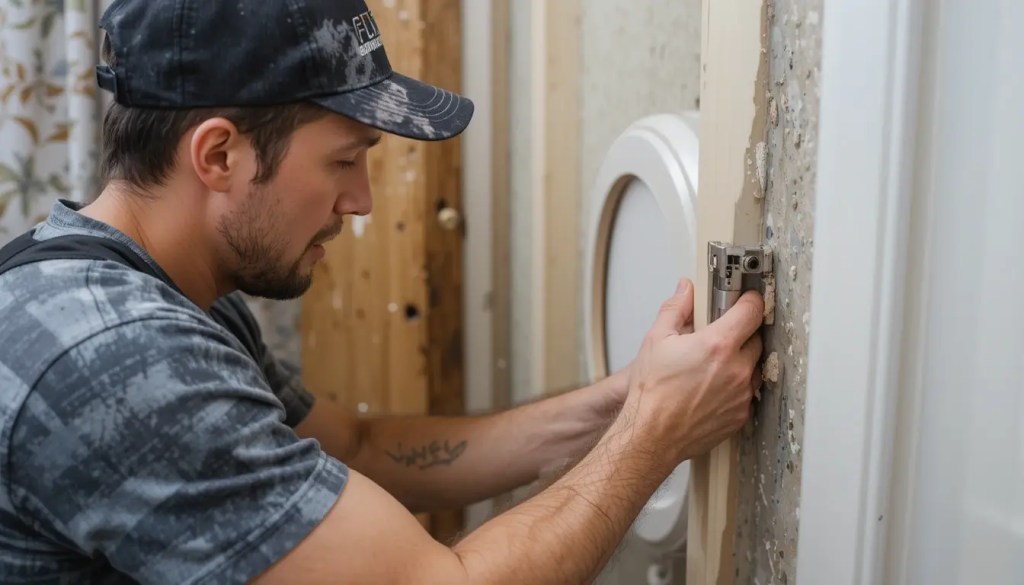
A toilet door frame provides structural support for the door. Over time, exposure to moisture, physical impact, and general wear can cause damage. Cracks, warping, or rotting in wooden frames may weaken the structure. Metal frames may rust or corrode, affecting durability.
Repairing or replacing a toilet door frame ensures safety and improves the door’s functionality. Homeowners should assess the extent of damage before deciding between repair or replacement. A well-maintained door frame prevents misalignment, drafts, and further structural issues.
Common Signs of Toilet Door Frame Damage
Warping or Swelling
Wooden door frames absorb moisture, causing them to swell or warp. This can make opening and closing the door difficult. Warping may also lead to uneven gaps around the door, reducing insulation.
In high-humidity areas, warping is a frequent issue. Regular sealing or waterproofing helps prevent this problem. If the frame is severely swollen, replacement may be the best option.
Cracks or Splitting
Cracks in the door frame can appear due to repeated stress or poor-quality materials. Small cracks can be filled with wood filler or sealant. Large cracks may compromise the frame’s strength and require replacement.
Splitting occurs when the frame experiences excessive pressure. This can result from improper installation or long-term wear. Reinforcement may fix minor splits, but structural damage often requires a full replacement.
Rotting or Mold Growth
Wooden frames in humid bathrooms may develop rot or mold. Rot weakens the frame, making it unstable. Mold growth can cause health issues and spread to nearby surfaces.
Rotting sections can sometimes be cut out and replaced with new wood. If rot has spread extensively, replacing the entire frame is necessary. Waterproof coatings and proper ventilation help prevent future moisture damage.
Rust or Corrosion
Metal door frames are prone to rust, especially in damp environments. Rust weakens the frame, leading to structural failure. Scraping off rust and applying anti-corrosion treatments can extend the frame’s lifespan.
Severe rust may cause holes or deep deterioration. In such cases, replacement is the safest solution. Choosing rust-resistant materials, like aluminum or stainless steel, can help prevent future issues.
Loose Hinges or Misalignment
A weak or damaged frame may cause the door to sag or misalign. Loose hinges can strain the frame, making it difficult to close the door properly. If tightening the hinges does not fix the issue, the frame may need reinforcement or replacement.
Misalignment can also result from shifting foundations or long-term wear. Adjusting the door or replacing worn-out sections of the frame may help restore proper alignment.
Steps for Repairing a Toilet Door Frame
Assessing the Damage
Examine the door frame carefully to determine whether repair is an option or if a full replacement is necessary. Minor cracks, small sections of rot, or surface rust can often be fixed with patching materials or treatments. However, if the frame is severely weakened, warped, or structurally unstable, replacing it is the safer and more durable choice. A damaged frame can affect the alignment of the door, leading to difficulty in opening and closing, which may cause further wear over time.
When inspecting a wooden frame, use a screwdriver or knife to check for soft spots that indicate rot or moisture damage. For metal frames, tapping the surface can help detect hollow or weakened areas caused by rust. Identifying these issues early prevents further deterioration and ensures long-term durability. Homeowners looking to upgrade their bathroom doors can benefit from toilet door replacement services, which provide expert installation and high-quality materials suited to humid environments. A well-installed door enhances privacy, improves functionality, and contributes to the overall aesthetics of the bathroom.
Filling Cracks and Holes
Small cracks or holes can be filled with wood filler or epoxy. After applying the filler, sand the surface smoothly before repainting or sealing.
For metal frames, rust spots can be treated with a wire brush and rust converter. Filling holes with metal putty and repainting the frame helps restore its strength.
Reinforcing Weak Sections
Adding metal brackets or additional wood pieces can strengthen weak areas. This method is useful for repairing sections affected by minor warping or splitting.
Use waterproof adhesives or screws to secure reinforcement materials. Ensure that the frame remains aligned to prevent further issues.
Repainting or Sealing
Applying paint or sealant protects the frame from moisture and damage. Waterproof coatings prevent wood rot, while rust-resistant paints help metal frames last longer.
Choose high-quality, bathroom-friendly paint to prevent peeling or mold growth. Regular maintenance keeps the frame in good condition.
When to Replace a Toilet Door Frame
Extensive Damage
If large sections of the frame are cracked, rotted, or rusted, replacement is necessary. Repairing such damage is often temporary and may lead to further problems.
A weakened frame may not support the door properly. In these cases, installing a new frame ensures long-term durability and safety.
Persistent Warping or Misalignment
Severely warped frames may not return to their original shape. If the door remains difficult to close even after adjustments, replacement is the best solution.
Misalignment due to structural shifts may also require a new frame. Ensuring a proper fit prevents issues with door functionality.
Frequent Repairs
If the frame requires repeated repairs, replacing it may be more cost-effective. Constant patching can weaken the overall structure, leading to more expenses in the long run.
A new frame eliminates recurring problems and provides better durability. Choosing moisture-resistant materials reduces future repair needs.
How to Replace a Toilet Door Frame
Removing the Old Frame
Start by unscrewing the hinges and removing the door. Use a crowbar or hammer to detach the old frame from the wall. Be careful to avoid damaging surrounding surfaces.
Check for hidden nails or screws before pulling the frame out. Clean the area and remove any remaining debris.
Measuring and Preparing the New Frame
Take accurate measurements of the opening to ensure the new frame fits properly. Choose a frame material that suits the bathroom environment.
Pre-drill holes in the frame for easy installation. If necessary, apply a waterproof coating before installing.
Installing the New Frame
Position the new frame in place and secure it with screws or nails. Use a level to check alignment before tightening all fasteners.
Seal any gaps with caulk or foam insulation to prevent moisture entry. Allow adhesives or sealants to dry before reattaching the door.
Reinstalling the Door
Attach the door to the hinges and test its movement. Ensure that it opens and closes smoothly without resistance.
Make final adjustments if needed. Paint or seal the frame for added protection against moisture and wear.
Choosing the Right Door Frame Material
Wood
Wood is a common choice for door frames. It is easy to cut and install but requires sealing to prevent moisture damage. Hardwoods like oak or teak resist rot better than softwoods.
Metal
Metal frames, such as aluminum or stainless steel, are durable and resistant to moisture. They require minimal maintenance but may dent or corrode over time.
PVC or Composite
PVC and composite materials offer moisture resistance and durability. These options are lightweight, easy to install, and require little maintenance.
Maintenance Tips for a Long-Lasting Door Frame
Keep the Frame Dry
Wipe off excess moisture regularly to prevent water damage. Use exhaust fans or dehumidifiers in the bathroom to reduce humidity levels.
Inspect for Damage Regularly
Check for cracks, rust, or misalignment every few months. Address minor issues early to prevent major repairs or replacements.
Repaint or Seal Annually
Apply a fresh coat of paint or sealant once a year. This helps protect against moisture, mold, and rust.
Conclusion
Toilet door frames experience wear due to moisture and frequent use. Repairing minor damage can extend the frame’s lifespan, but extensive issues require replacement. Choosing the right materials and maintaining the frame properly helps prevent future problems.
Regular inspections, prompt repairs, and moisture protection keep the frame in good condition. A well-installed and maintained door frame ensures smooth functionality and long-term durability.
 Every Corner
Leave a comment